Arthritis

Arthritis has been used to describe chronic irritation, inflammation and degeneration of a joint. However, arthritis is broken up into two groups; inflammatory and degenerative. Inflammatory arthritis produces excessive swelling of the joint and can lead to pain and erosive changes in the joint if left unchecked. Degenerative arthritis as the name implies is a wearing down of the cartilage used to protect the joint. While this does not produce any significant swelling, pain will occur through the friction that occurs when the cartilage has worn away and liberation to the joint is lost. The degenerative changes will cause stiffness in the joint, which is worsened with waking up in the morning due to lack of movement to the area overnight. The goal of treating degenerative arthritis is therefore to increase flexibility, joint mobility, and improve surrounding musculature function to the area without further irritation. The goal of treating inflammatory arthritis is first and foremost to reduce inflammation to the area temporarily, followed by a plan for helping to prevent the inflammation from re-occurring. As Arthritis patients will have pain in the surrounding tissue, a therapeutic plan should be addressed to lend relief and support of the affected area. Conservative treatment can have profound effects on decreasing symptoms and improving function
Carpal Tunnel Syndrome
The carpal tunnel is created by the wrist bones on the bottom and a ligament over the top. The median nerve runs through the tunnel along with the flexor tendons to the wrist. Pressure within the tunnel can compromise the nerve and lead to carpal tunnel syndrome. The hallmark of carpal tunnel syndrome is numbness in the thumb, index and middle finger. Additional symptoms can include:
- Numbness that is worse at night
- Weakness in the thumb muscles of the hand (in severe cases)
The condition is more common in pregnant women, middle age women, and people with jobs that include daily repetitive hand motions. The condition is diagnosed by a physical exam, as well as a Nerve Conduction Study, an electrical study that measures the length of time that it takes for a signal to cross the carpal tunnel. A delay is indicative or carpal tunnel syndrome. Intitial treatment usually consists of conservative physical therapy, contrast baths, nerve-tendon gliding exercises and addressing other potential causes of nerve entrapment (cervical spine, thoracic outlet, pronator teres muscle of the forearm). If the symptoms persist, cortisone injections can be tried. If conservative measures fail, or there is evidence of nerve damage (such as weak thumb muscles or profound numbness), then the carpal tunnel can be released by surgically incising the ligament to give the nerve root more room.
Cervical Herniated Disc
Arm pain from a cervical herniated disc is one of the more common cervical spine conditions treated by spine specialists. It usually develops in the 30 � 50 year old age group. Although a herniated disk may originate from some sort of trauma or injury to the cervical spine, the symptoms commonly start spontaneously. The arm pain from a cervical herniated disc results because the herniated disc material "pinches" or presses on a cervical nerve, causing pain to radiate along the nerve pathway down the arm. Along with the pain, numbness and tingling can be present down the arm and into the fingertips. Muscle weakness may also be present. The two most common levels in the cervical spine to herniate are the C5 � C6 level (cervical 5 and cervical 6) and the C6 � C7 level. The next most common is the C4 � C5 level, and rarely the C7 � T1 level may herniate. The nerve that is affected by the disc herniation is the one exiting the spine at that level, so at the C5 � C6 level it is the C6 nerve root that is affected. Symptoms: A cervical herniated disc will typically cause pain patterns and neurological deficits as follows:
- C4 � C5 (C5 nerve root) � Can cause weakness in the deltoid muscle in the upper arm. Does not usually cause numbness or tingling. Can cause shoulder pain.
- C5 � C6 (C6 nerve root) � Can cause weakness in the biceps (muscles in the front of the upper arms) and wrist extensor muscles. Numbness and tingling along with pain can radiate to the thumb side of the hand. This is one of the most common levels for a cervical disc herniation to occur.
- C6 � C7 (C7 nerve root) � Can cause weakness in the triceps (muscles in the back of the upper arm and extending to the forearm) and the finger extensor muscles. Numbness and tingling along with pain can radiate down the triceps and into the middle finger. This is also one of the most common levels for a cervical disc herniation.
- C7 � T1 (C8 nerve root) � Can cause weakness with handgrip. Numbness and tingling and pain can radiate down the arm to the little finger side of hand.
It is important to note that the above list comprises typical pain patterns, but they are not absolute. Some people are simply wired up differently than others, and therefore their symptoms will be different. Since there is not a lot of disc material between the vertebral bodies in the cervical spine, the discs are usually not very large. However, the space available for the nerves is also not that great, which means that even a small disc herniation may impinge on the nerve and cause significant pain. The pain is usually most severe as the nerve first becomes pinched. The majority of the time, the pain from a cervical herniated disc can be controlled with conservative (non-surgical) treatments alone are enough to resolve the condition. Once the pain does start to improve it is unlikely to return, although it may take longer for the weakness and numbness/tingling to improve. If the pain gets better it is acceptable to continue with conservative treatment, as there really is no literature that supports the theory that surgery helps the nerve root heal quicker. All treatments for a cervical herniated disc are essentially designed to help resolve the pain and neurologic symptoms, and improve function.
Headaches
Cervicogenic Headaches occur when joints and/or muscles are dysfunctional in the neck. This can cause pain in the head from a variety of sources:
- Compression of nerves that innervate the head
- Referred pain into the head from the neck from tight muscles
- Referred pain into the head from joints in the neck that are not moving properly
Upon physical examination, it can be easily determined if this is the cause of your head pain. Once diagnosed, comprehensive treatment to eliminate the cause of the pain can yield highly successful outcomes.
Iliotibial Band
The iliotibial band is a thick band of tissue that extends from the thigh down over the knee and attaches to the tibia. When the knee bends (flexion) and straightens (extension), the iliotibial band slides over the bony parts of the outer knee (lateral femoral epicondyle). The term iliotibial band friction syndrome(ITBFS) refers specifically to a syndrome of lateral knee pain related to irritation and inflammation of the distal portion of the iliotibial band at, or just distal to, the point at which it crosses the lateral femoral epicondyle. Iliotibial band friction syndrome is an overuse injury caused by repetitive friction of the iliotibial band across the lateral femoral epicondyle. It is a well recognized cause of knee pain in runners so it is commonly called "runner's knee", although the condition is not unique to runners, however, nor is lateral knee pain the only manifestation of iliotibial band injury. It is now frequently seen in cyclists, weight lifters, skiers and soccer players. It has also been found that injury to the iliotibial band and related structures may be noted as lateral "hip" or lateral thigh pain, as well as lateral knee pain.
Knee Bursitis
Your body has sacks of fluid located in strategic places to allow your tendons to glide effortlessly over your bones. If you did not have a bursa, your joints would be painful with every movement. However, sometimes this sack of fluid becomes inflamed from either an injury (such as a direct blow to the knee), overuse (such as kneeling to scrub floors) or infection. When the bursa becomes inflamed, doctors add the ending "itis" meaning inflammation. Thus, your bursa becomes bursitis. Usually bursitis produces a very specifically located swelling on your knee.
- Pes Anserine Bursitis is swelling located on the inside (medial) part of your knee along the upper part of your tibia. The pain of bursitis is usually sharp and worse with either touching the area or even when you sleep and the two knees touch each other. This typically happens in older patients.
- Patellar bursitis (or "pre-patellar bursitis") is located over the front of the patellar ligament and kneecap (patella). The pain is located right in the front of your knee, and it can even be painful to have the bedsheets touch your skin in this area. This is the most common type of bursitis.
- An infection to the bursa usually has redness associated with this swelling and the pain is constant. If you think you may have an infection, please seek medical treatment immediately.
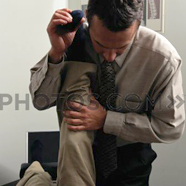
Knee Tendonitis
Our joints move by the power of your muscles. The muscles attach to your joints through tissues called tendons. The tendons transfer the force from your muscle across the joint and cause it to move. Sometimes this tendon becomes inflamed because it was injured (such as a direct blow to the thigh) or overused (such as biking up hills). When the tendon is inflamed, doctors add the ending "itis" and thus, we call this tendonitis. Chronic cases are called tendonosis indicating chronic inflammation. In some cases, the tendon actually tears in half and this is called a tendon rupture. If you can not straighten your knee because of pain over your tendons, seek medical treatment immediately. Tendonitis pain is usually described as an ache that can be sharp with exiting from a chair or with squatting. The pain is usually improved with rest. Usually the patellar tendon in the front of your knee is most involved. This is called "patellar tendonitis" or "jumper�s knee". Sometimes the pain can be so bad that even the weight of your bedsheets on your knee can irritate the pain. Identifying the causes of the pain and inflammation and directing functional treatment have very good outcomes for this condition.
Low Back Pain
A study published in Spine, tested which method worked better to treat chronic spine pain, acupuncture, spinal manipulation, or drugs.
Method: 115 patients randomly assigned to receive either manipulation, drugs (Celebrex, Vioxx, or paracetamol), or acupuncture.
Results: "chiropractic manipulation patients did better than both drugs and acupuncture."
The patients in the manipulation group reported 47% improvement as compared to 15% for the acupuncture group and 18% for the medicine group. The improvement was not limited to just back pain, but also included improvement of one�s overall health.
If conservative physical rehabilitation plateus, our doctors in office are equipped to give epidural steroid injections to eliminate back pain and radicular pain so you can function normally again.
Lumbar Herniated Disc / Sciatica
Pain along the large sciatic nerve that runs from the lower back down through the buttocks and along the back of each leg - is a relatively common form of back pain. Sciatica is usually caused by pressure on the sciatic nerve from a herniated disc (also referred to as a bulging disc, ruptured disc or pinched nerve). The problem is often diagnosed as a "radiculopathy", meaning that a disc has protruded from its normal position in the vertebral column and is putting pressure on the radicular nerve (nerve root). For some people, the pain from sciatica can be severe and debilitating. For others, the pain might be infrequent and irritating, but has the potential to get worse. Usually, sciatica only affects one side, and the pain often radiates through the buttock and/or leg. One or more of the following sensations may occur:
- Pain in the buttocks and/or leg that is worse when sitting
- Burning or tingling down the leg
- Weakness, numbness or difficulty moving the leg or foot
- A constant pain on one side of the buttocks
- A shooting pain that makes it difficult to stand up
Symptoms that may constitute a medical emergency include progressive weakness in the legs or bladder/bowel incontinence. Patients with these symptoms may have cauda equina syndrome and should seek immediate medical attention. Any condition that causes irritation or impingement on the sciatic nerve can cause the pain associated with sciatica. The most common cause is lumbar herniated disc. Other common causes include lumbar spinal stenosis, degenerative disc disease, or isthmic spondylolisthesis. Nerve pain is caused by a combination of pressure and inflammation on the nerve root, and treatment is centered on relieving both of these conditions. Conservative treatment is designed to decrease pain and inflammation, decrease intra-discal pressure, improve flexibility and mobility and to improve muscular function.
Mechanical Neck and Back Pain - Muscle Dysfunction
When joint dysfunction develops, muscles are affected. Some muscles respond by becoming tense and overactive, while others respond by becoming inhibited and underactive. In either case, these muscles can develop trigger points. Trigger points are areas of congestion within the muscle where toxins accumulate (2). These toxins can irritate the nerve endings within the muscle and produce pain. This pain can occur in the muscle itself or can be referred pain (perceived in other areas of the body). The resulting muscle imbalance can place increased stress on the joint, aggravating the joint dysfunction that already exists The muscle can also send abnormal neurological signals into the nervous system. This can then cause disruption of the ability of the nervous system to properly regulate muscles in other parts of the body, leading to the development of faulty movement patterns. Conservative treatment is designed at maximizing motion, improving flexibility and finally maximizing muscular coordination, endurance and strength.
Migraines
A study was preformed in Australia at the Chiropractic Research Center of Macquarie University that proved that chiropractic care helps migraines. One hundred seventy-seven volunteers who had migraines for over eighteen years on average were used. The volunteers who received chiropractic care showed a statistically significant improvement in migraine frequency, duration, and disability! Those who received chiropractic care were also able to considerably reduce the amount of medication they were taking, some eliminating the use of medication altogether.
Neck and Back Pain - Joint Dysfunction
This occurs when one of the joints in the spine or limbs loses its normal joint play (resiliency and shock absorption). It is detected through motion palpation, a procedure in which the doctor gently moves the joint in different directions and assesses its joint play. When a joint develops dysfunction, its normal range of movement may be affected and it can become painful. In addition, joint dysfunction can lead to a muscle imbalance and muscle pain and a vicious cycle:
- The loss of joint play can cause abnormal signals to the nervous system (there are an abundance of nerve receptors in the joint)
- The muscles related to that joint can subsequently become tense or, conversely, underactive
- The resulting muscle imbalance can place increased stress on the joint, aggravating the joint dysfunction that already exists
Any joint of the spine, including the Sacroiliac Joints, can cause mechanical pain. Joints are designed to move and when they do not, pain and degeneration occurs. Conservative treatment is designed at maximizing motion, improving flexibility and finally maximizing muscular coordination, endurance and strength.
Patella-femoral Pain Syndrome / Chondromalacia Patella
This disease is also known as softening of the cartilage of your knee cap or "anterior knee pain". This is a big medical word for a condition where the shiny cartilage surface of your patella (knee cap) is softened due to many factors including abnormal pressure across the joint surface or hormonal changes in your body.
This pain is usually located over the front of your knee and is described as a deep aching pain. It is sometimes associated with swelling and is usually worse when your knee is bent for long periods of time such sitting in a car or bus. The pain is also worse with such activities as running, biking, squatting, kneeling or stair climbing (either up or down stairs). It is sometimes associated with mild or moderate swelling of the knee and some people report a grinding feeling in their kneecap. It is more common in younger females especially after a growth spurt where the knee must carry more weight.
Many times this problem can be due to muscular imbalance of the quadriceps muscle whereby the outer quadriceps is stronger than the inner quadriceps muscle and causes the knee cap to track up the thigh incorrectly. This cause irritation and inflammation on the undersurface of the knee cap and ultimately cartilage degeneration. It is usually pretty simple to diagnose the problem, but the key is to look at the feet first!
Plantar Fasciitis
A condition that occurs when there is chronic inflammation to a large band of tissue on the bottom of your foot called the plantar fascia. Because this fascia is on the bottom of your foot, doctors call this area the plantar surface meaning sole of the foot in Latin. The purpose of this ligament is to help support the arch of your foot.
When this fascia becomes inflamed, doctors add the ending "itis" thus, the term plantar fasciitis. Sometimes, on x-rays, a heel spur is seen - however, it is not the cause of your pain - numerous scientific studies have shown that the plantar fascia is the primary source of pain (i.e. don't let anyone talk you into surgery to remove the heel spur). The cause of this condition is not fully understood, but it is more commonly found in females and overweight people. When both feet are involved, this is sometimes associated with a certain type of arthritis, which can be evaluated with a simple exam and tests by your doctor. This problem can often caused by a heel cord (achilles tendon) that is too tight.
The pain occurs on the bottom of your heel, more towards the inside usually ("medial"). It hurts to take a step or walk. Most patients report that the pain is worst when getting out of bed in the morning. The pain usually gets better after walking around for a whil.. The reason the pain is worst in the morning is because the plantar fascia has had the chance to contract (shorten, tense up) all night long while you were sleeping. The pain can be described as a sharp pain (like stepping on a pebble) or a dull aching/throbbing pain.
Plantar fasciitis is very common, but luckily is easy to treat without surgery!
Pregnancy
The American Chiropractic Association just released this useful information for moms to be. Pregnancy can cause a great strain on a woman's body. With the baby growing women can feel pain in their back, legs, buttocks, and experience increased pressure on her sciatic nerve. Chiropractic care can help! Chiropractic is a safe non-drug non-surgical approach to back pain. Chiropractic care can also be helpful after childbirth. In the eight weeks following labor the ligaments begin to tighten up again. Any problems brought on during pregnancy from improper lifting/reaching should be addressed before the ligaments return to their pre-pregnancy state.
Rotator Cuff Tendinitis
The rotator cuff is a set of four muscles (Supraspinatus, Infraspinatus, Subscapularis, and Teres Minor) that lie over the humeral head in the shoulder that help provide shoulder stability. These muscles can become inflamed and produce shoulder pain. The pain tends to be:
- Generally worse at night or after activity
- Shoulder motion causes pain and is limited
- More common in athletes who do a lot of throwing
- More common in older individuals (over 50)
If the pain is severe, it can be difficult to distinguish between rotator cuff tendinitis and a cervical radiculopathy. Tendinitis may be associated with a rotator cuff tear, which can be diagnosed with either an MRI scan or an arthrogram of the shoulder.
Treatment includes conservative treatment to decrease pain and inflammation, improve muscular coordination, identify and correct underlying causes and finally to strengthen the rotator cuff. If a tear is present, surgery may be necessary to repair the torn muscle/tendon. In many cases, there may be bursa involvement (subacromial bursa) which can cause bursitis and there also may be underlying issues in the cervical and thoracic spine (neck and upper back) which needs to be identified and corrected.
Whiplash
Whiplash is a term that describes injury to the neck that occurs as a result of a motor vehicle or car accident. The most common type of car accident is the rear impact, and most typically, the occupant in the vehicle that gets "rear-ended" (hit from behind) is at the greatest risk of injury. Until recently, the reason for the extent of injury was poorly understood. In addition, due to the legal and insurance issues, the veracity of complaints of neck pain and other symptoms by people who suffer from whiplash is commonly viewed as suspect. However, recent research has helped clarify why occupants struck from behind experience more extensive injuries than those in other types of crashes. This new information is important for the physician treating these problems, as it impacts the physician�s case management strategy. In fact, whiplash injuries can be quite complex and may include a variety of related problems, such as:
- Joint dysfunction
- Disc herniation
- Faulty movement patterns
- Chronic pain
- Cognitive and higher center dysfunction
Chiropractors are specialists in treating non-surgical spine injuries and commonly treat whiplash injuries from car accidents. The job of the chiropractor in helping his or her patients overcome the pain and disability associated with whiplash is to:
- Diagnose the source of the pain
- Treat the most important dysfunctions
- Teach the patient to return to a more normal lifestyle
The process of rehabilitation requires a concerted effort between the chiropractor, the patient and any other professional assisting in the case. The likelihood of success is enhanced by a continued focus on restoring normal function.
More and more people are looking for practitioners who will approach their health from a whole-person perspective. Treating is not the same as healing, which means helping physically and emotionally. If more personalized health care sounds appealing to you, you're in luck because there are a growing number of integrative options to choose from. Learn about your natural health options at Choose Natural.
|